
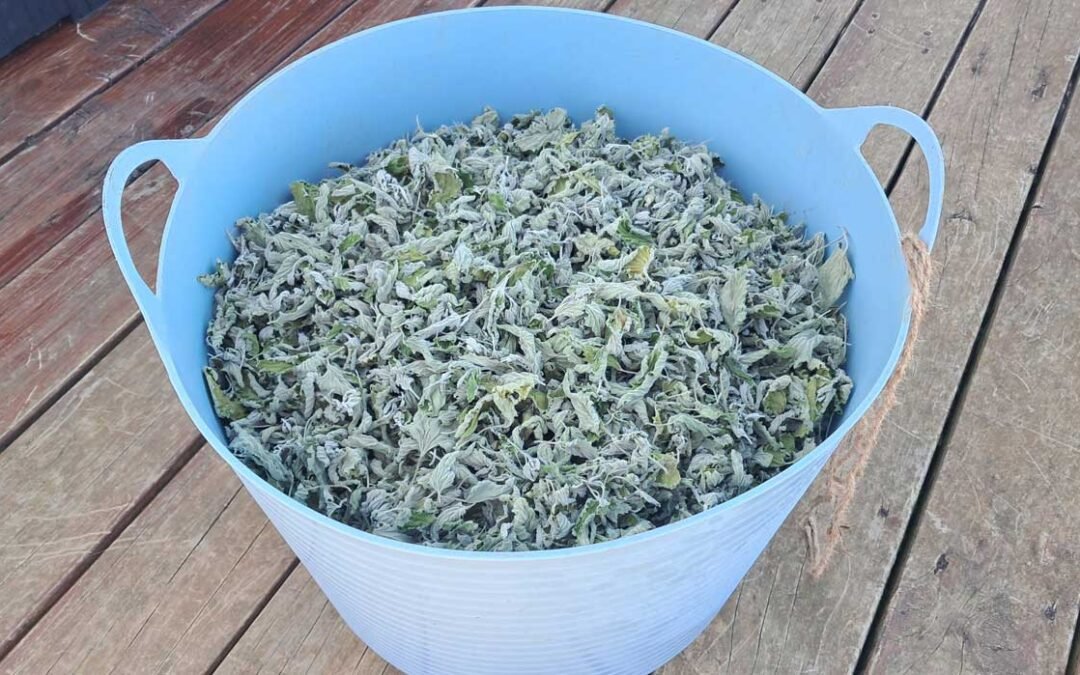
In my last post in this series, I talked about the catnip harvest, a process that lasts for about 3 weeks each December.
When we last saw the catnip, it was fresh and left hanging in our container on custom-made racks to dry naturally.
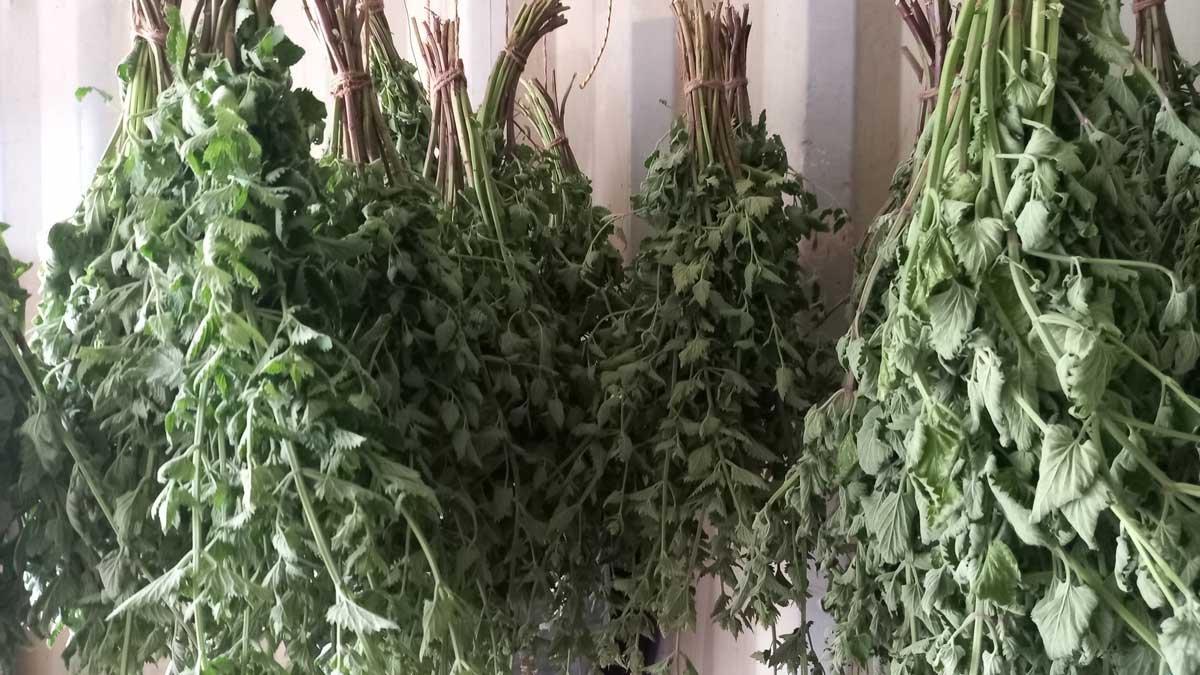
It takes somewhere between 2 and 4 weeks for the catnip to dry. The time depends almost-entirely on the weather.
Cool and wet weather slows it down, while warm dry weather speeds it up.
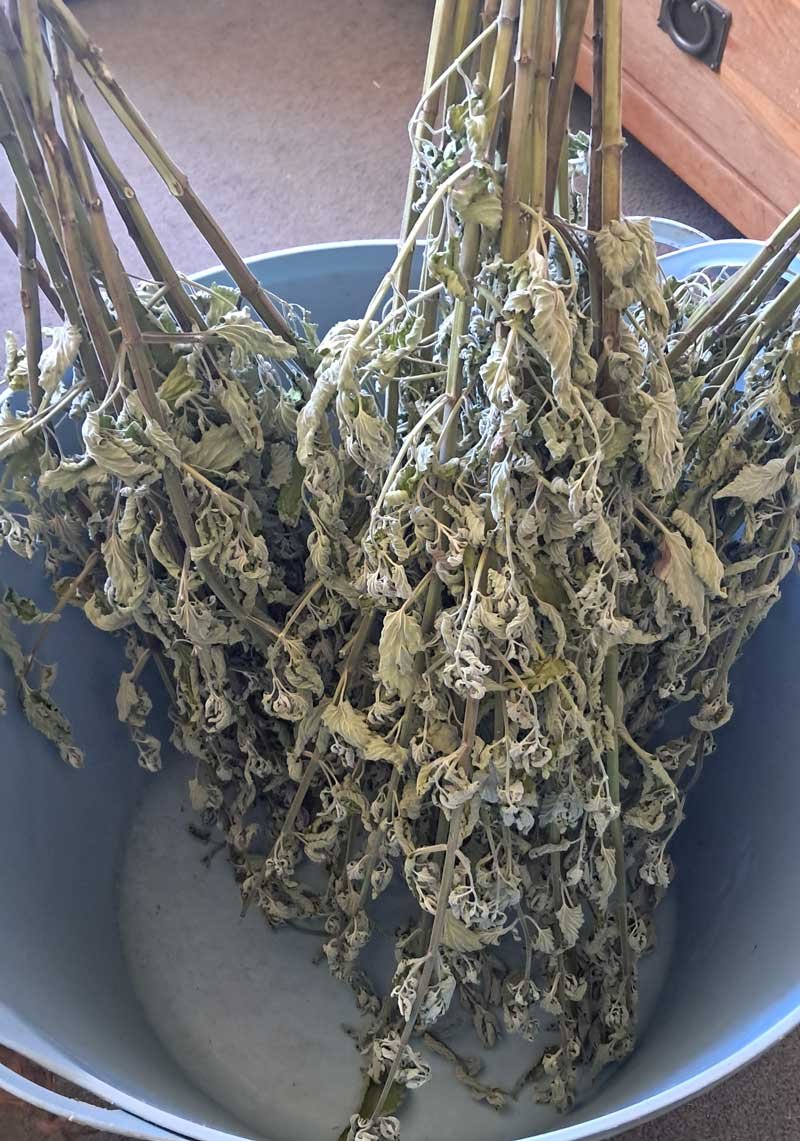
Three bunches of crispy catnip ready for processing.
After a couple of weeks have passed, I begin checking on the catnip each morning to judge whether it’s ready. I don’t use any special equipment to tell me, I rely on my senses.
The catnip is ready when the stems of the tips aren’t ‘wobbly’, and the leaves are ‘crispy’. At this stage, if a stem were held out horizontally in front of you, the tip wouldn’t flop towards the ground. They’d stay relatively straight.
When pinched between the fingernails of the thumb and forefinger, the leaves snap right off. There’s no dampness in any buds.
When the bunches are ready, I carefully place three or four of them into my trusty flexi-bins. I remove the strings and collect them together to reuse at next year’s harvest. Then I bring the stems inside.
I usually spend the afternoons in late December and early January processing catnip. I can sit in front of the air-con, staying safely away from the sun, and watch a whole lot of TV.
If I’m honest with you, it’s not the part of this job I love. But it is probably the most important part of the whole process to get right.
The quality of the product you receive depends a lot on how I do this. There are several processing methods I don’t use. They’re all much faster and easier than what I actually do. I don’t violently or quickly rip the leaves off. And I certainly don’t mulch the whole lot up into tiny pieces.
I want to keep as much of the active ingredient and essential oil of the plant, in the plant. Because that’s the bit your cat loves so much. Damaging the leaves releases those chemicals. There’s no point me doing it now—`that’s the bit I want to reach you, the customer buying it!
So I spend my summer afternoons hunched over a bucket of catnip where I carefully pull each and every leaf off each and every stem by hand. This is not a quick process. It’s fiddly, and difficult to find a comfortable position.
But there are choices I’ve already made during harvest which help this along. Some stems produce more catnip, while others are easier to process. Over the years I’ve learned to make processing easier on myself by harvesting more of the latter, and less of the former.
This year, over the course of three weeks, I got through three seasons of The Brokenwood Mysteries (18 hours), as well as a week of The Traitors UK (3 hours), the season premiere of Drag Race Season 18 (1 hour), and the first episode of BBC’s Pride and Prejudice (1.5 hours) while processing catnip.
In the end, I was left with just under a kilogram of processed catnip. That might not seem like a whole lot, but the leaves and buds of catnip aren’t very heavy. So it takes up a fair volume of space. And if I sell it all in 2026, it’ll be my best year yet.
I package this all up into the extra-large Glad ziplock bags that I save and re-use every year. I stuff the bags and push out most of the air for storage.
The smallest, crumbliest pieces left right in the bottom of the bin are packed separately to go into Fluffy Ball production.
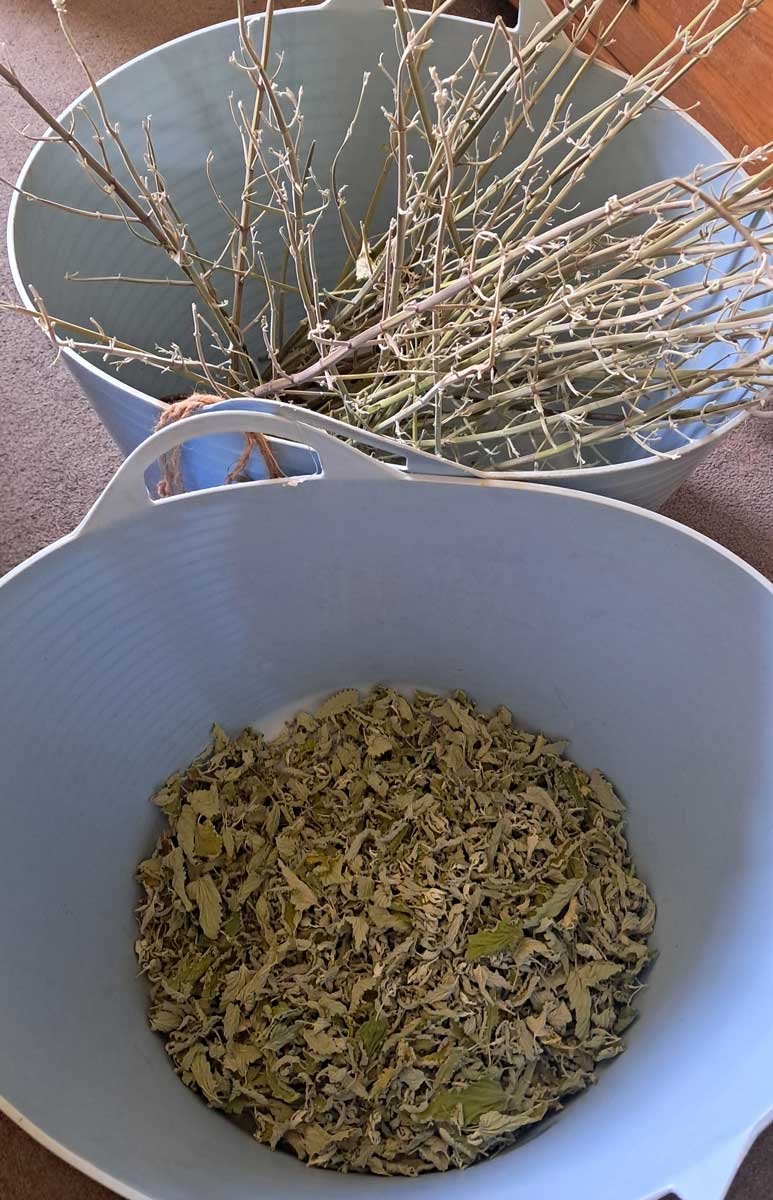
The processed catnip and stems from the three bunches of catnip shown earlier.
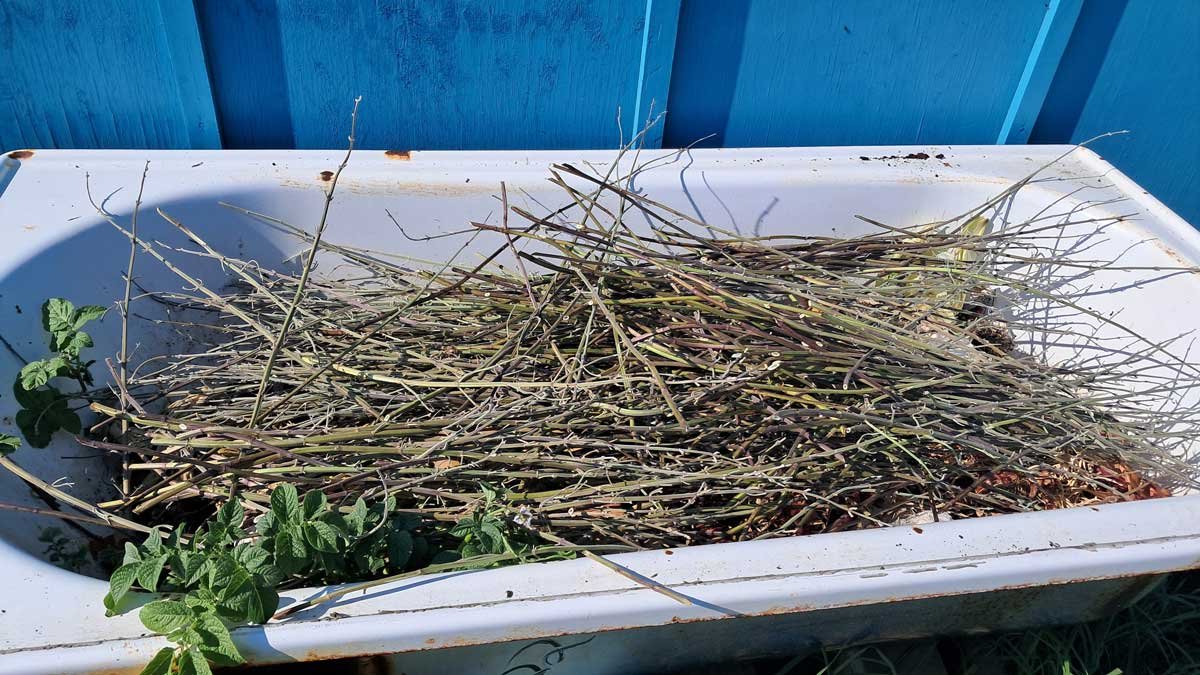
I’m also left with hundreds of dry sticks as a waste product. These are great ‘carbon’ content for our composting and worm farming systems, so they get fed to the worms to begin the cycle back towards the garden again.
It’s not worth the petrol to mulch them, they break down quickly and add plenty of oxygen to the compost when thrown in there whole.
Other catnips might choose one of the easier processing methods, and every year I do end up asking myself if it’s worth it. But I think it is.
You don’t get stems in Kat’s Nip. And the first person to release those essential oils is probably the postie, which is why I think so many cats have been recorded as attacking the mail!
But it arrives with you with all that goodness inside that package. It’s your cat who benefits when you crush the leaves and let them at a pile of loose-leaf catnip, brew it into a viral catnip tea, or let them tear into a Fluffy Ball.
It’s only a few hours each day over a few weeks each year. But I think it makes all the difference in the world.